

Key Takeaways:
- How Can Early Signs of Struggle Affect a Student’s Journey in Learning Mathematics?
If early signs of math difficulties—such as avoidance, frequent mistakes, or sudden drops in performance—go unnoticed, small gaps in understanding can quickly develop into major obstacles. Over time, this can make the learning process more challenging and erode the students’ confidence.
Introduction
For many children, learning mathematics can feel overwhelming. The process involves understanding new concepts, memorising formulas, and applying them to solve problems. If students miss out on the basics, each new topic can become harder to understand, making them feel frustrated. Often, students won’t directly say they are struggling. However, the signs can show up in subtle ways—through changes in behaviour, attitudes, and learning habits.
In this article, we highlight the early indicators of math difficulties and how parents can identify the right time to seek extra support for their children. Specifically, a maths tuition centre can offer targeted guidance to help your child rebuild confidence in learning mathematics.
What are the Early Signs of Math Struggles?
1. Avoids Math Homework or Says It’s “Boring”
If your child repeatedly claims that math is boring, it could be a cover for confusion or frustration. Avoidance behaviour often signals that certain topics feel challenging. Instead of pushing them to “just finish it,” try to uncover which concepts are causing the roadblock.
2. Takes Too Long to Complete Simple Questions
When a child spends excessive time on basic sums, it could mean their number sense or understanding of basic operations is shaky. Without strong foundations, learning mathematics at higher levels becomes much harder. For example, a child who hasn’t fully mastered basic addition, subtraction, or multiplication will struggle with fractions, ratios, or algebra later.
3. Frequently Makes “Careless” Mistakes
Careless mistakes, whether it’s copying wrong numbers or mixing up signs, can happen to any student. However, when these errors occur frequently, they may reflect stress, poor focus, or gaps in understanding. To reduce these mistakes, encourage your child to build good learning habits, such as working through problems step by step and double-checking answers.
4. Shows a Sudden Drop in Math Test Scores
A drastic dip in academic performance may indicate difficulty in grasping new concepts. For instance, a primary school student who once excelled in addition and subtraction might suddenly struggle when faced with fractions or complex word problems. This shift can happen quickly, often when students are not familiar with the new concept. It is essential for parents to consistently monitor their child’s progress by reviewing their homework, classwork, and test results to detect their weaknesses early. As such, you can step in timely with the right support, like signing them up for a primary math tuition centre.
5. Reluctant to Ask Questions or Seek Help
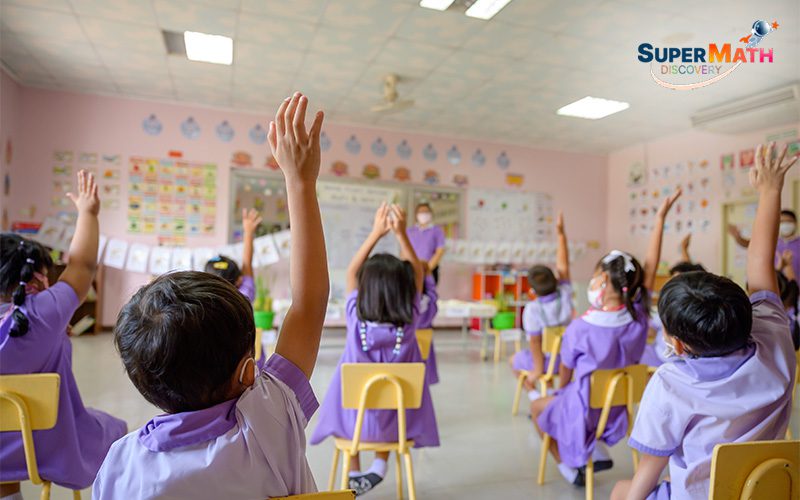
Some children stay quiet in class to avoid drawing attention to themselves, especially when they don’t understand the lesson. This reluctance often stems from a fear of embarrassment—worrying about making mistakes in front of peers. In the long run, this silence can prevent students from clarifying doubts and filling important knowledge gaps.
6. Displays Negative Emotions Towards Math
If your child shows signs of anxiety, frustration, or even fear before math lessons or tests, it’s worth exploring the cause. Most of the time, emotional responses reflect deeper struggles that transcend the subject matter. But gentle encouragement and consistent practice can always help rebuild confidence. A small step may be praising your child for practising similar problems together each day.
7. Avoids Applying Math in Real-Life Situations
Math is an essential life skill that underpins countless everyday activities. For children, building strong math skills early not only boosts academic success but also boosts their confidence to apply these abilities in real-world situations. If your child regularly avoids number-related tasks, such as calculating change or measuring ingredients, it may indicate a lack of confidence in using their mathematical knowledge.
Why Early Intervention Matters
When math difficulties are identified early, parents can take proactive steps to address them. Enrolling your child in a dependable math tuition programme can help bridge learning gaps before they widen. The earlier the intervention, the easier it is to strengthen foundational skills and improve long-term academic performance.
At SuperMath, we are committed to nurturing every child’s potential through tailored support, engaging lessons, and proven strategies. Our comprehensive programmes, including P1 math tuition, are designed to strengthen foundations and develop positive mathematics-learning habits. With the right guidance, we help students approach math with confidence, curiosity, and a readiness to tackle new challenges.
Contact us today to learn more about enrollment.
