
Part 1: Introduction
Imagine a classroom where students are genuinely excited about solving math problems, just as much as they are about beating the next level in a video game. Thanks to the growing link between games and education, this kind of enthusiasm is no longer just limited to the former.
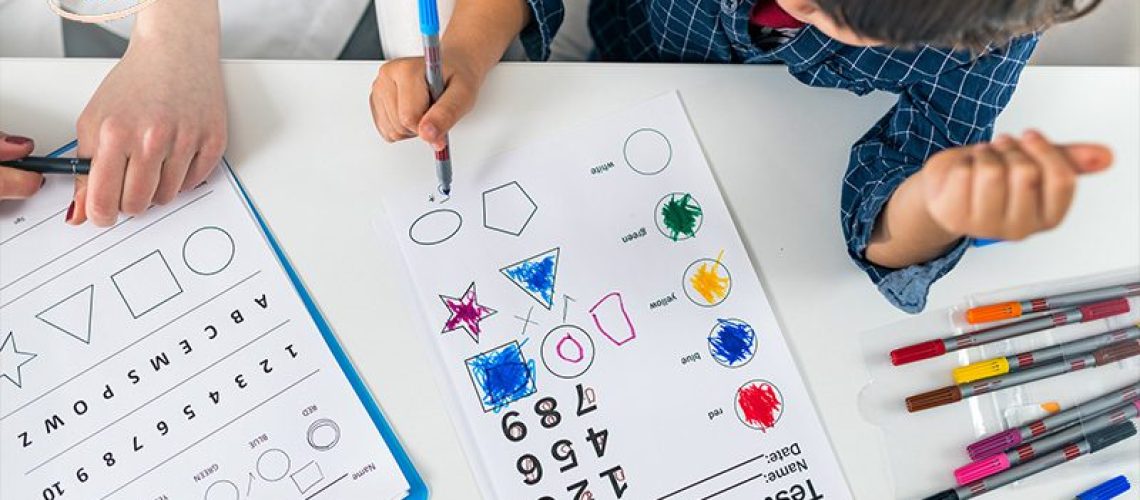
While traditional teaching methods still play an important role, they can often feel repetitive and disengaging, especially for younger learners. Long drills and worksheets may be effective in building accuracy, but they do not always spark curiosity or inspire confidence. This is where games and education can come together as a powerful tool. Games naturally capture attention, offering goals, rewards, and challenges that motivate students to push further.
When lessons are wrapped in play, learners are not only more engaged, but also more willing to experiment, take risks, and learn from mistakes. This helps build resilience and encourages a positive attitude towards subjects like mathematics, which many children find daunting. In addition, play-based activities promote memory retention, sharpen focus, and develop essential math problem-solving skills.
In this article, we will explore how game-based methods are transforming modern learning, why they work so effectively, and how they support students for their PSLE and O-Level math prep.
Key Takeaways
- Game-based learning can transform traditional classrooms into engaging, interactive spaces that encourage curiosity and exploration.
- Students build lasting memory, stronger focus, and effective math problem-solving skills when learning feels like play.
- By injecting an element of fun into exam readiness, game-inspired learning can help motivate students to strive for success in PSLE, O-Levels, and beyond.
Part 2: Gamification: What You Need to Know About Game-Based Learning
2.1. What Is Game-Based Learning (GBL)?
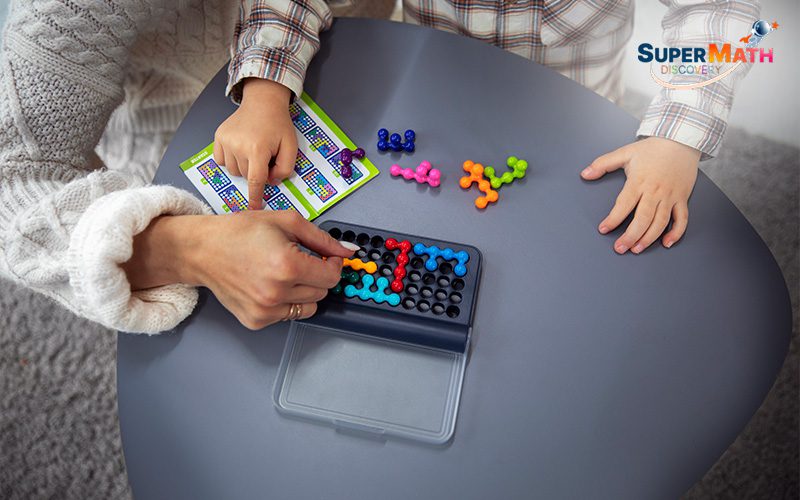
Game-Based Learning (GBL) is an educational approach that incorporates elements of play to deliver and reinforce academic concepts. Instead of simply listening to a teacher or working through worksheets, students learn through active participation. This approach turns lessons into experiences where learners solve problems, make decisions, and test ideas, often without even realising that they are studying. The connection between games and education lies in the way games naturally stimulate curiosity, encourage exploration, and provide a safe environment to learn from mistakes.
In classrooms and tuition centres, interactive math education built on GBL allows students to practise core concepts whilst feeling motivated and engaged. A simple activity such as solving timed puzzles can boost number fluency, while digital platforms can make abstract topics more concrete through visual simulations.
Key Features of Game-Based Learning:
- Interactive gameplay that fosters active participation
- Incorporation of rewards like points, badges, and leaderboards
- Real-time feedback that encourages progress and learning from mistakes
- Progressive difficulty to match each student’s pace and skill level
- Engagement through competition, curiosity, and storytelling
Why It Works:
- Incentivises learning and the need for achievement through rewards and recognition
- Improves student engagement in learning, as lessons feel more like play than routine work
- Supports both intrinsic and extrinsic motivation by combining the love of learning with external gratification
In Singapore, where students often face intense pressure to perform well in examinations, the combination of games and education offers a less stressful path to academic success. By making learning enjoyable, GBL reduces anxiety and builds confidence whilst still ensuring that students develop strong problem-solving skills and lasting conceptual understanding in math.
2.2. Why Game-Based Learning Matters for the Future
Education today is not only about preparing students for exams; it is also about equipping them with the right skills to thrive in an increasingly complex and fast-changing world. Employers now value abilities such as creativity, adaptability, and problem-solving just as much as technical knowledge. This means that schools and tuition centres must look beyond rote memorisation and foster deeper, more practical skills. Here, the connection between games and education becomes especially important.
Through play-based methods, students are encouraged to explore, experiment, and collaborate. This builds resilience and a mindset that embraces challenges rather than avoiding them. By turning learning into a process of discovery, games and education not only make lessons more enjoyable but also prepare students for the demands of the real world when they enter the workforce.
Top Future-Ready Skills:
- Critical Thinking: The ability to analyse and evaluate information for effective decision-making.
- Creativity: Developing the confidence to think innovatively and find new solutions.
- Emotional Intelligence: Understanding emotions and navigating social interactions with empathy and respect.
- Problem-Solving: Strategically approaching complex or unfamiliar challenges with logic and adaptability.
According to Forbes, these are the most desirable traits today, as they are all essential for one to thrive both academically and professionally. To that end, gamified maths learning creates opportunities for students to nurture these skills in a safe and engaging way.
By cultivating critical thinking through games, learners build habits that will serve them well even beyond school. They become independent thinkers, capable of transferring knowledge to real-world situations. In short, embracing game-based learning ensures that education is not only about scoring marks, but also about building the confidence, adaptability, and mindset required for the future.
2.3. Types of Game-Based Learning Tools
One of the strengths of combining games and education is the flexibility it offers. Game-based learning is not restricted to digital apps or video games; it can take many forms, each designed to suit different subjects, learning goals, and age groups. These tools can be used both in schools and math tuition centres, simplifying abstract concepts and turning them into fun but meaningful experiences.
Examples of Game-Based Learning Tools:
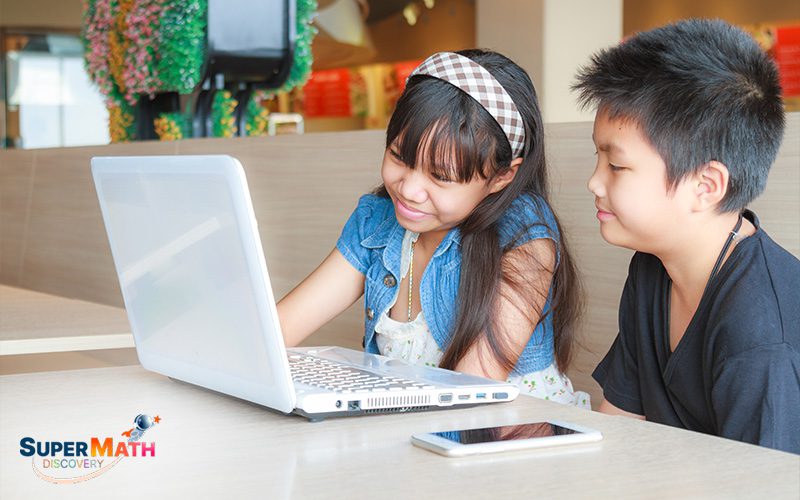
- Digital games: Online platforms or mobile apps use puzzles, simulations, and interactive challenges to teach difficult topics. For mathematics, digital tools can turn algebra or geometry into visual, hands-on exercises that improve conceptual understanding in math.
- Math relays or quiz battles: These group activities create a spirit of teamwork and competition, encouraging students to solve problems quickly whilst strengthening focus and speed. They are particularly useful for building confidence before exams.
- Custom learning platforms with built-in gamification mechanics: Singapore’s math tuition centres are increasingly adopting systems with points, badges, and progress tracking. These motivate learners by making achievements visible and rewarding perseverance.
The diversity of these tools shows that games and education are more than just an outlet for entertainment; they help build student engagement in learning, improving retention, and nurturing math problem-solving skills in ways that traditional methods often cannot. That being said, most schools are required to stick to the curriculum that is already planned out for them, which can limit the way classes can be carried out. This is why it could be beneficial to enrol your child in PSLE or O-Level math tuition to expose them to a different kind of learning experience, where tutors have more freedom to incorporate play-based learning.
2.4. How Does Game-Based Learning Differ From Traditional Methods?
As education evolves, the contrast between traditional teaching and game-based approaches becomes more distinct. While both have their strengths, the way students interact with knowledge is very different. Traditional lessons often rely on memorisation and repetition, whereas the link between games and education creates opportunities for deeper engagement and more lasting skills.
Traditional Learning Methods:
- Teacher-centred instruction — knowledge flows mainly from teacher to student
- Heavy use of textbooks and worksheets — with focus on memorising and practice drills
- Passive learning — students primarily listen, take notes, and recall facts
- One-size-fits-all — limited flexibility for diverse learning styles
Game-Based Learning (GBL):
- Student-centred learning — learners interact with content actively through play
- Motivating elements — points, levels, badges, and rewards increase interest
- Skill development — builds memory, focus, math problem-solving skills, and critical thinking through games
- Adaptive and inclusive — caters to different learning styles and paces
In Singapore’s notoriously competitive education system, games and education provides a more holistic and organic way to learn. While traditional methods focus on accuracy, GBL prioritises engagement and encourages students to explore their curiosities.
Part 3: Understanding the Relationship of Games and Education: The Role of Game-Based Learning
3.1. How Game-Based Learning Enhances Math Education
Mathematics is one of the core subjects where students often struggle to stay motivated. The use of games and education creates an environment where abstract concepts become less intimidating and more engaging. By weaving play into lessons, students not only enjoy learning but also find it easier to build lasting skills that help them excel in exams and beyond.
1. Strengthening Memory Through Play
Memory retention is crucial in mathematics, particularly when learning multiplication tables, number bonds, or algebraic rules. Games naturally repeat key ideas, which helps transfer information into long-term memory. Visual puzzles and memory-matching activities engage spatial awareness, improving recall. With activities that encompass both games and education, students absorb essential knowledge more naturally and are able to recall it on instinct even during high-pressure exams.
2. Enhancing Focus and Attention
Games provide clear objectives and structure, which help students remain task-oriented. Timed activities such as math relays encourage concentration and train learners to work efficiently under exam conditions. Because the link between games and education reduces monotony, students are less likely to lose interest and more likely to enter a “flow state,” where distractions fade and focus sharpens.
3. Developing Problem-Solving and Critical Thinking
Mathematics is ultimately about solving problems, and games are designed around challenges that require strategy and logic. Through trial-and-error in a safe environment where learners are allowed to make mistakes and fail, they can practise decision-making without repercussions. This builds resilience, nurtures critical thinking, and helps students recognise patterns, make connections, and apply reasoning in real-life contexts, all of which are essential for developing strong problem-solving skills for math and other subjects.
3.2. How SuperMath Does It
At SuperMath, we believe that every child can excel in mathematics when lessons are interactive and engaging. As one of Singapore’s leading math tuition centres, our philosophy combines proven teaching methods with the benefits of games and education. This ensures that students are not only studying or enrolling in primary math tuition to do well in exams, but that they genuinely enjoy the subject.
How We Do It:
- We integrate points, challenges, and rewards into each lesson, turning mathematics into a stimulating experience that feels like solving puzzles or playing strategy-based games. This approach enhances student engagement and keeps lessons meaningful.
- Our curriculum is aligned with national standards, so students are well-prepared for examinations. At the same time, we focus on ensuring that learners grasp the reasoning behind solutions rather than memorising steps.
- More importantly, we encourage students to become independent thinkers. By linking games and education to real-life problem-solving, we help them strengthen problem-solving skills and gain confidence in tackling even the toughest questions.
This combination of academic rigour and play-based learning makes SuperMath more than just another run-of-the-mill math tuition centre; it is a place where confidence and curiosity grow in tandem.
FAQs
1. Will my child be playing games the whole time?
Not at all. At SuperMath, games and education are integrated appropriately into lessons to reinforce key concepts. Students are not merely playing for fun, as each activity has a clear learning goal. While they enjoy interactive challenges, they are simultaneously building conceptual understanding in math, focus, and math problem-solving skills.
2. What makes this different from traditional tuition?
Unlike traditional tuition, which often focuses on memorisation and repetitive drills, SuperMath integrates games and education to make learning interactive and engaging. This approach is a departure from the grind that tends to wear students out more quickly. Instead, it allows students to enjoy the learning process and encourages them to be more receptive to new or even complex information.
3. Can this help students who are already struggling with math?
Absolutely. SuperMath’s approach of utilising games and education lowers the stakes so students feel less pressured to excel right away. Although the end goal of doing well remains the same, it is important to alleviate that burden so students are in a better state of mind to make sense of complex equations and abstract concepts instead of feeling like they are being force-fed information.
The connection between games and education has opened up a new avenue for students to experience learning. By integrating play into lessons, students tend to become more willing to engage and participate, and when they are invested, it is easier for them to develop essential skills like memory, focus, and problem-solving. These skills are not just applicable in mathematics; they are just as vital to other facets of life.
Here at SuperMath, our philosophy is deeply rooted in our belief that education should be holistic. Instead of forcing students to learn, our goal is to nudge them towards building a natural interest and curiosity in math, and combining games and education is a key part of our lesson strategy. Whether it is tuition for PSLE or O-Level math, these classes are designed to help students develop conceptual understanding in math and cultivate the necessary skills to tackle challenges and overcome hurdles, be it in or outside the classroom.
SuperMath is more than a math tuition centre; we are a place where children learn to think critically, solve problems, and engage actively in learning.
To learn more about our math programmes, tutors, and how we can support your child’s academic journey, please contact us today.
