6 PSLE Mathematics Topics That Often Trip Students Up
The PSLE Mathematics syllabus spans a wide range of mathematics topics. Not only does it assess a student’s ability to perform calculations, but it also tests their critical thinking and problem-solving skills. While some students manage to grasp the content with ease, many face hurdles when dealing with complex math problems. For parents, understanding where their child is struggling is key to helping them overcome these difficulties. This article shares some of the PSLE Math challenges that commonly trip students up.
7 Early Signs of Math Struggles Every Parent Should Know
For many children, learning mathematics can feel overwhelming. The process involves understanding new concepts, memorising formulas, and applying them to solve problems. If students miss out on the basics, each new topic can become harder to understand, making them feel frustrated. Often, students won’t directly say they are struggling. However, the signs can show up in subtle ways. In this article, we highlight the early indicators of math difficulties and how parents can identify the right time to seek extra support for their children.
Tips for O-Level Candidates: How to Manage Time in Maths Exam
One of the biggest concerns O-Level candidates face during the A-Maths and E-Maths papers is running out of time. Poor exam pacing often leads to rushed answers, unfinished questions, and avoidable mistakes that cost precious marks. Success in these exams depends not only on mastering math concepts but also on effective time management. With the right strategies, you can complete the paper at a steady pace. Keep reading to learn how to manage time in a maths exam.
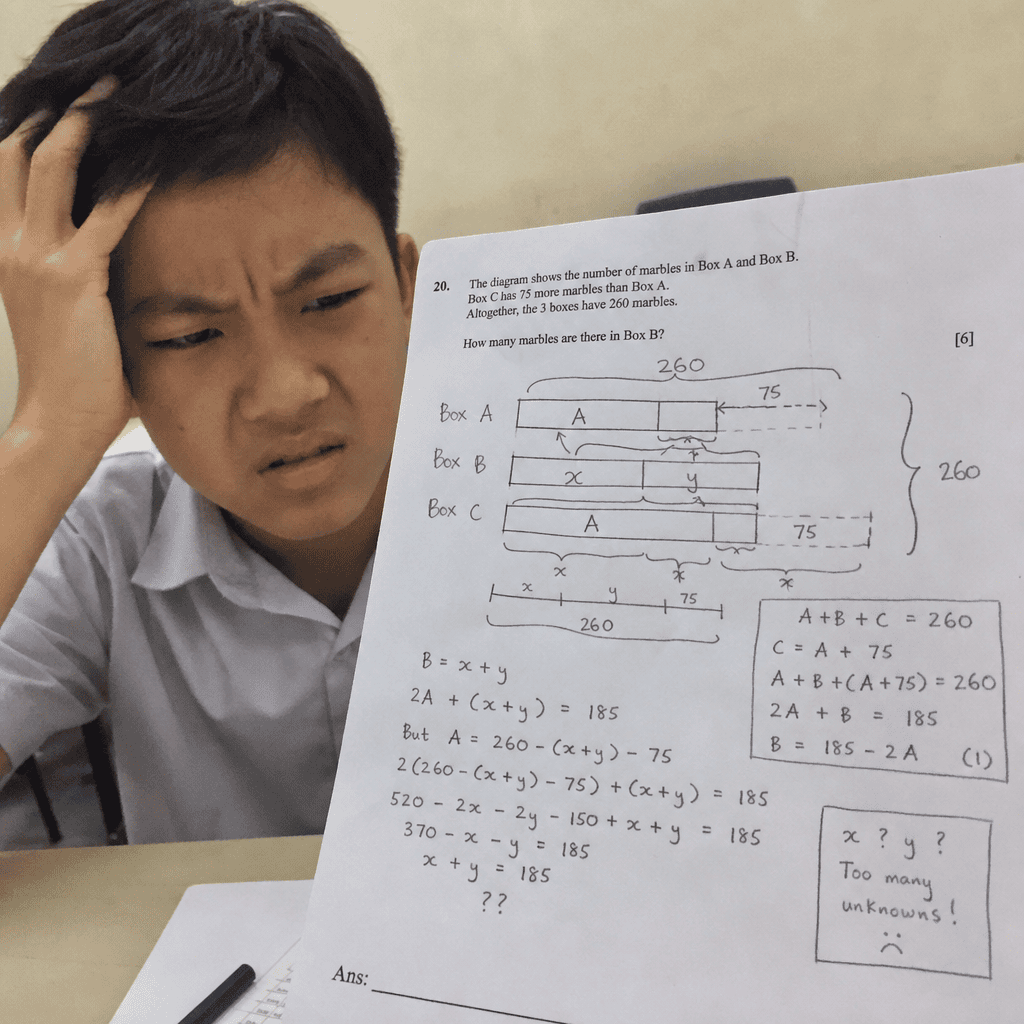
How to Tackle the Hardest PSLE Maths Questions with Confidence
Facing the hardest PSLE maths questions can feel daunting or even overwhelming, but with the right mindset and strategies, students can quickly build confidence. This article explores how critical thinking in maths, step-by-step problem solving, and practice techniques can help students manage tough questions effectively, turning challenges into opportunities to strengthen understanding and improve exam performance.
The Link of Games and Education: How Game-Based Learning Boosts Memory, Focus, and Problem Solving
The connection between games and education goes beyond fun. In fact, it is well-established that game-based learning can sharpen memory, improve focus, and strengthen maths problem-solving skills that are also applicable to other subjects. By turning challenges into interactive experiences, students engage more deeply with concepts and develop practical strategies that stick. Read on to learn how this approach bridges play and learning, helping children build confidence whilst mastering essential academic skills.
What is Conceptual Learning? Does it Matter More Than Rote Memorisation in Math?
Conceptual learning goes beyond memorising formulas. It focuses on understanding ideas, patterns, and connections, allowing students to apply knowledge flexibly. Unlike rote learning, this approach strengthens math problem-solving skills, helping learners tackle both familiar and unfamiliar questions with confidence. By mastering concepts, students develop reasoning abilities essential for long-term success, both in mathematics and beyond. Keep reading to find out more.
How to Tackle the Hardest PSLE Maths Questions with Confidence
Facing the hardest PSLE maths questions can feel daunting or even overwhelming, but with the right mindset and strategies, students can quickly build confidence. This article explores how critical thinking in maths, step-by-step problem solving, and practice techniques can help students manage tough questions effectively, turning challenges into opportunities to strengthen understanding and improve exam performance.
A-Maths vs E-Maths: What’s the Difference and Which One Should You Choose?
When Singapore students enter secondary school, one of the biggest academic decisions they face is choosing between E-Maths and A-Maths. Both are examinable secondary school math subjects at the O-Level, but they serve very different purposes. E-Maths equips you with life and work-ready math skills, while A-Maths prepares you for advanced academic pathways. The choice of A-Maths vs E-Maths often reflects whether you’re leaning towards science and technology fields, or the arts and humanities. In this article, we break down A-Maths vs E-Maths differences to help you decide which path best suits your strengths and long-term plans.
How Gamified Learning Makes Math Fun and Effective for Students
Mathematics is often seen as one of the most dreaded subjects among students. The pressure of exams, complex formulae, and lengthy problem-solving sums can quickly turn maths lessons into a source of stress rather than enjoyment. But what if maths learning could feel more like playing a game? This is where gamified learning comes into play. Keep reading to discover how this approach, applied in classroom settings and some maths tuition centres, can make maths more engaging and effective for students.